
Messor cephalotes
169.99
Not available: We don't sell Messor cephalotes and never import ants from Africa. Read why in our press coverage on Kenya's illegal ant trade. Looking for giant harvesters? Our Messor barbarus colonies are captive-bred and the best starter harvester.
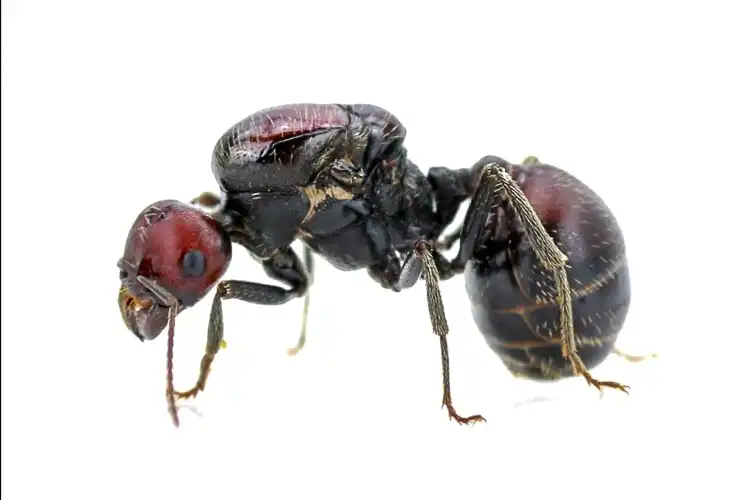
Messor cephalotes, the Giant African Harvester Ant, is a species from Africa with elevated food and climate requirements.
Founding: Claustral (no feeding needed until first nanitics)
Distribution: Ethiopia, Kenya, Tanzania.
Habitat: Sandy and shrubby areas.
Colony Form: Monogynous (one queen per colony)
Queen ant: Size: 23-25mm Colour: Shiny reddish. Messor queen ant's lifespan is up to 25 years.
Worker ants: Size: 5-18mm Colour: Shiny reddish, with varying forms. Small (minor: 3-7mm) workers - they usually care for the brood and the Queen ant's needs. Normal-sized (media: 6-10mm) ones - care for the ants' bread-making and nest cleaning. Majors - protect the colony's nest and the queen. Sometimes cooperate with the media workers regarding seed chewing.
Soldiers: No
Diet: Seeds of different grasses and wild plants, as well as small insects like mealworms, locusts and crickets.
Feeding: Give the young colonies and founding queens more protein jelly and honey, while established colonies with 50–100 workers can be fed seed mix.
How to feed them and how much?
So the golden rule is 1 seed per ant per month. Feed them every two weeks (half dosage, for instance: 30 ants = 15 seeds every two weeks). The first feeding dose must be doubled. Keep an eye on their food storage so they always have one nest’s chamber full of seeds.
Humidity: outworld: 40-50%; nest: 60-70%
Temperature: outworld: 24-30°C; nest: 24-28°C. It would be best if you used a heat mat.
Hibernation: No
Ant Farm: consider a large ant farm.
Decoration: pebbles, twigs etc.
Description: This species is primarily a granivorous ant that collects small seeds and chews them into antbread. They obtain most of their water from seeds and insects. Messor cephalotes ants tend to drown in open water, so it is important to use a water feeder.
Colony Age: Up to 27 years
Colony Size: Up to 10,000 worker ants
It is important to note that gel farms are not a suitable habitat for harvester ants, as they can quickly become mouldy and do not provide the necessary nutrition for the colony. To ensure the safety and well-being of these fascinating creatures, it is essential to provide them with a proper ant farm and diet.
Escape Prevention: Harvester ants are not the best climbers but if you do not want to deal with escaped ants, which is a common issue while you feed them, apply about an inch wide of PTFE Fluon.
Messor cephalotes Q&A
Q: How big do Messor cephalotes get? A: Queens reach 23–25 mm (shiny reddish). Workers are polymorphic: 5–18 mm (minors, media, majors) — very impressive to watch!
Q: What do they eat? A: Mainly seeds (grasses/wild plants) chewed into "ant bread", plus occasional small insects (mealworms, locusts, crickets). Young colonies need extra protein jelly and honey; established ones thrive on our seed mix.
Q: Do they need hibernation? A: No — no hibernation required. They do well year-round in warm conditions (nest 24–28°C, outworld 24–30°C — use a heat mat).
Q: What humidity and temperature do they need? A: Outworld: 40–50% humidity. Nest: 60–70%. Temperature: Outworld 24–30°C, nest 24–28°C. A heat mat helps maintain stability.
Q: How large can the colony grow? A: Up to 10,000 workers over time. Queens live up to 25 years — a long-term colony project!
Q: Is it suitable for beginners? A: Best for experienced keepers due to size, heat/humidity needs, and large enclosure requirements. We recommend a large ant farm setup.
Q: Any special care tips? A: Use water feeders (they drown in open water). Golden feeding rule: 1 seed per ant per month (every 2 weeks, double first dose). Keep one nest chamber full of seeds. Add pebbles/twigs for natural decoration.
Q: Where are they from? A: East Africa (Ethiopia, Kenya, Tanzania) — sandy/shrubby habitats.
Perfect for watching massive foraging trails and seed processing! If you have more questions, just ask — happy ant keeping! 🐜
📄 Download the free Messor cephalotes care sheet (PDF): two pages on temperature, humidity, feeding and winter care, written by our team. Print it and keep it next to your ant farm.
🐜 Thinking about a second colony one day? Explore all our free ant care sheets and compare species by difficulty, origin and climate.