Free UK Delivery on orders over £99

Atta cephalotes
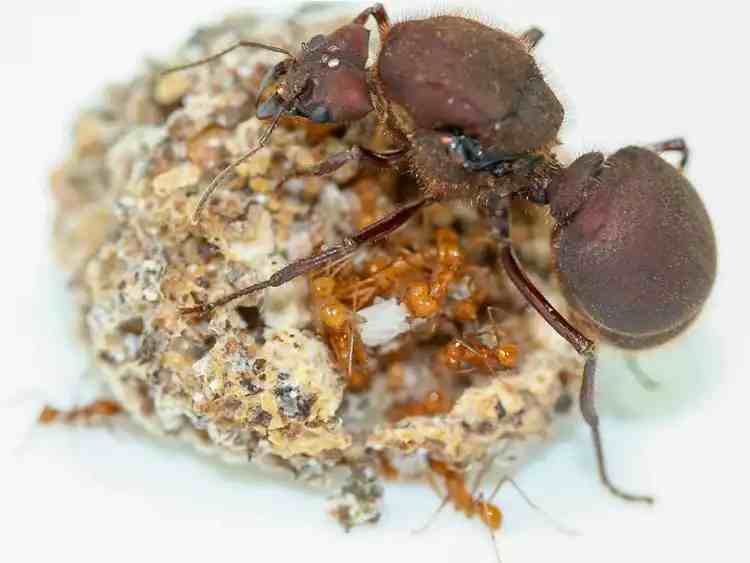
Giant Leafcutter Ant

🐜 At a glance
Origin: 🌎 Central and South America
Keeping level: Expert — a fungus-farming species with strict climate needs. They bite hard; no sting
Queen: Large, brown-orange
Workers: From 2mm nano-workers to 20mm majors with strong cutting jaws
Colony form: Single queen (monogyne)
Nest temperature: 23–26°C (outworld 21–28°C)
Nest humidity: 85–95% in the fungus chamber; outworld 40–70%; waste area 30–40%
Workers before moving into a nest: Always a colony with its fungus garden — never a lone queen
Winter: No hibernation — keep warm all year
📖 About this species
The giant leafcutter of the Americas, with workers ranging from tiny 2mm gardeners to huge 20mm majors. The ants never eat the leaves they cut — they feed them to the Leucocoprinus gongylophorus fungus, which turns plant cellulose into food for the whole colony.
📦 When your ants arrive
⚠️ MOST IMPORTANT: leave the parcel completely unopened, exactly as it arrived, at room temperature for 5 hours. The ants must adjust to your home’s temperature gradually — abrupt temperature changes make ants seriously unwell.
After the 5 hours, check the queen is safe and sound, then leave the colony in its original packaging (test tube still in its tin foil and wrapping) in a quiet spot — in daylight, never direct sunlight — away from vibration and daily household activity.
😴 Give the colony 4 to 5 days of complete rest. The ants were fed before dispatch and need nothing from you during this time. Assemble and water the nest while you wait.
Still workers or a motionless queen after delivery are almost always delivery stress. Check the antennae: moving antennae means she is fine. Almost all recover within 4 to 5 days (a little longer for bigger queens).
Do not remove the black divider inside the test tube (between the two cotton stoppers) — it keeps the ants safe in transit. It has a hole, and the queen and all workers pass through it without any issue.
👑 Leafcutters always arrive as a colony: the queen, her workers and their fungus garden. A queen on her own cannot survive — the fungus is the colony's only food. Losing up to a third of the fungus in transit is normal; with the right warmth, humidity and fresh leaves the colony rebuilds it.
🏠 Setting up the colony
🍄 Leafcutters need a dedicated setup with three parts: a warm, humid fungus chamber (80–90%), a foraging area where you offer leaves, and a dry waste area (30–40%) where the ants dump spent material.
Let the colony rest for at least 5 days after arrival before any change. Never shake, tip or touch the fungus garden — the ants move it themselves when they are ready.
The red filter and black cover stay on the fungus chamber at all times. The black cover can come off once a day for 2 to 3 minutes (ideally at night).
☀️ Place the setup in normal daylight, never direct sunlight. Avoid windows, radiators and heaters, vibrating surfaces, speakers and TVs, strong smells such as the kitchen, and busy walkways. Keep a steady, warm room temperature.
🍯 Feeding
🍃 Leaves are not eaten by the ants — they feed the fungus, and the fungus feeds the colony. Offer fresh, lightly moistened leaves: bramble (blackberry), raspberry, rose, box, elder, lime, oak and chestnut leaves all work well.
🍎 Small pieces of apple, orange, banana or grape, and a few oat flakes, make welcome extras.
🌸 Fresh leaves should always be the main food. Our dried Dandelion Leaves, Rose Petals and Blue Mallow Flowers are safe for the fungus — alternate them with fresh leaves every other day.
🚫 Only use leaves free from pesticides and road dirt. Never use staghorn sumac — it is toxic to the fungus. Remove old, dried-out leaves after 2 days.
💧 Watering the nest
💧 Use distilled or purified water only — never tap, rainwater or bottled mineral water, even boiled.
The fungus chamber must stay humid (80–90%) at all times: if the fungus dries out, the colony starves. Keep the waste area dry.
Lightly moisten leaves with a fine mist before feeding — never soak them.
🌡️ Temperature and winter
🌴 No hibernation. Atta cephalotes comes from a warm climate and must stay at 23–26°C all year round — in a UK home this means gentle heating in the cooler months.
Use the Advanced Heating System Small 4W warming no more than a quarter of the nest, on the side opposite the water inlet, so the ants can choose their temperature. For a colony still in its test tube, use the Heating Mat with Thermostat Small 4W and heat only about 25mm of the tube, at the end opposite the water — never lay the whole tube on the mat.
Never let the colony get cold, and never expose it to abrupt temperature changes.
🤩 Did you know?
A mature Atta colony can hold several million workers in an underground city with hundreds of chambers.
The smallest workers often ride on the leaf pieces as bodyguards, fending off parasitic flies.
⭐ Golden rules | Never break these
🚫 Never put ants in a fridge, and never expose them to abrupt temperature changes. Cold does not kill a colony instantly — the ants get sick and die over the following days — and prolonged cold near freezing damages the sperm a queen stores from her nuptial flight, so she may never lay fertile eggs again.
🚫 Never use gel ant farms, Ytong or concrete nests, or DIY nests.
🚫 Never use tap, rain or mineral water, even boiled.
🚫 Never move a colony into a nest too early, and never tip or shake ants out of their tube.
🚫 Never disturb the colony with tapping or handling — vibration stresses the queen and she can stop laying or eat her eggs.
☀️ Never keep the farm in the dark: ants need daylight for their circadian rhythm. Daylight yes — direct sunlight never.
🍄 Never let the fungus garden dry out or overheat — the fungus is the colony's only food.
🚫 Never release this species into the wild — a colony raised in an ant farm would not survive. If you can no longer keep it, visit our ants adoption page and ask us whether we can adopt it.
🛒 Recommended for this species
📚 These care notes cover the essentials only. Please read the full ant farm setup guide and our leafcutter ant article from A to Z. Questions? Message us through our contact form and we will be happy to help. 💚
Written and reviewed by the Best Ants UK team, keeping ants since 1997.