Free UK Delivery on orders over £99

Atta sexdens
Leafcutter Ant

🐜 At a glance
Origin: 🌎 South America
Keeping level: Expert — a fungus-farming species with strict climate needs. They bite hard; no sting
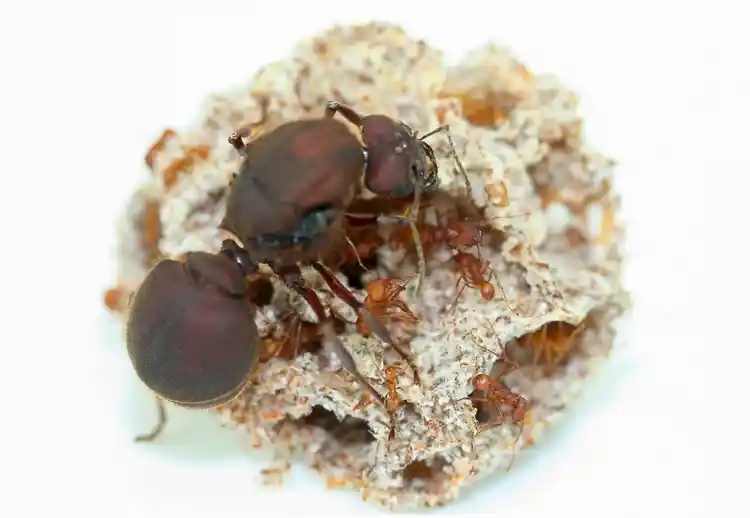
Queen: Around 30mm — one of the biggest ant queens in the world
Workers: 3–16mm workers; 18–23mm majors
Supplied as: Queen with about 100 workers and fungus
Colony form: Single queen (monogyne)
Nest temperature: 24–27°C (outworld 21–28°C)
Nest humidity: 80–90% in the fungus chamber; outworld 40–70%; waste area 30–40%
Workers before moving into a nest: Always a colony with its fungus garden — never a lone queen
Winter: No hibernation — keep warm all year
📖 About this species
A huge, highly organised leafcutter with a giant queen and impressive majors. Our colonies come as a queen with about 100 workers and their fungus. Not suitable for beginners — temperature, humidity and a steady leaf supply must always be right.
📦 When your ants arrive
⚠️ MOST IMPORTANT: leave the parcel completely unopened, exactly as it arrived, at room temperature for 5 hours. The ants must adjust to your home’s temperature gradually — abrupt temperature changes make ants seriously unwell.
After the 5 hours, check the queen is safe and sound, then leave the colony in its original packaging (test tube still in its tin foil and wrapping) in a quiet spot — in daylight, never direct sunlight — away from vibration and daily household activity.
😴 Give the colony 4 to 5 days of complete rest. The ants were fed before dispatch and need nothing from you during this time. Assemble and water the nest while you wait.
Still workers or a motionless queen after delivery are almost always delivery stress. Check the antennae: moving antennae means she is fine. Almost all recover within 4 to 5 days (a little longer for bigger queens).
Do not remove the black divider inside the test tube (between the two cotton stoppers) — it keeps the ants safe in transit. It has a hole, and the queen and all workers pass through it without any issue.
👑 Leafcutters always arrive as a colony: the queen, her workers and their fungus garden. A queen on her own cannot survive — the fungus is the colony's only food. Losing up to a third of the fungus in transit is normal; with the right warmth, humidity and fresh leaves the colony rebuilds it.
🏠 Setting up the colony
🍄 Leafcutters need a dedicated setup with three parts: a warm, humid fungus chamber (80–90%), a foraging area where you offer leaves, and a dry waste area (30–40%) where the ants dump spent material.
Let the colony rest for at least 5 days after arrival before any change. Never shake, tip or touch the fungus garden — the ants move it themselves when they are ready.
The red filter and black cover stay on the fungus chamber at all times. The black cover can come off once a day for 2 to 3 minutes (ideally at night).
☀️ Place the setup in normal daylight, never direct sunlight. Avoid windows, radiators and heaters, vibrating surfaces, speakers and TVs, strong smells such as the kitchen, and busy walkways. Keep a steady, warm room temperature.
🍯 Feeding
🍃 Leaves are not eaten by the ants — they feed the fungus, and the fungus feeds the colony. Offer fresh, lightly moistened leaves: bramble (blackberry), raspberry, rose, box, elder, lime, oak and chestnut leaves all work well.
🍎 Small pieces of apple, orange, banana or grape, and a few oat flakes, make welcome extras.
🌸 Fresh leaves should always be the main food. Our dried Dandelion Leaves, Rose Petals and Blue Mallow Flowers are safe for the fungus — alternate them with fresh leaves every other day.
🚫 Only use leaves free from pesticides and road dirt. Never use staghorn sumac — it is toxic to the fungus. Remove old, dried-out leaves after 2 days.
💧 Watering the nest
💧 Use distilled or purified water only — never tap, rainwater or bottled mineral water, even boiled.
The fungus chamber must stay humid (80–90%) at all times: if the fungus dries out, the colony starves. Keep the waste area dry.
Lightly moisten leaves with a fine mist before feeding — never soak them.
🌡️ Temperature and winter
🌴 No hibernation. Atta sexdens comes from a warm climate and must stay at 24–27°C all year round — in a UK home this means gentle heating in the cooler months.
Use the Advanced Heating System Small 4W warming no more than a quarter of the nest, on the side opposite the water inlet, so the ants can choose their temperature. For a colony still in its test tube, use the Heating Mat with Thermostat Small 4W and heat only about 25mm of the tube, at the end opposite the water — never lay the whole tube on the mat.
Never let the colony get cold, and never expose it to abrupt temperature changes.
🤩 Did you know?
“Sexdens” means “six teeth”, after the teeth on the workers' mandibles.
A single Atta queen can produce well over 100 million daughters during her life.
⭐ Golden rules | Never break these
🚫 Never put ants in a fridge, and never expose them to abrupt temperature changes. Cold does not kill a colony instantly — the ants get sick and die over the following days — and prolonged cold near freezing damages the sperm a queen stores from her nuptial flight, so she may never lay fertile eggs again.
🚫 Never use gel ant farms, Ytong or concrete nests, or DIY nests.
🚫 Never use tap, rain or mineral water, even boiled.
🚫 Never move a colony into a nest too early, and never tip or shake ants out of their tube.
🚫 Never disturb the colony with tapping or handling — vibration stresses the queen and she can stop laying or eat her eggs.
☀️ Never keep the farm in the dark: ants need daylight for their circadian rhythm. Daylight yes — direct sunlight never.
🍄 Never let the fungus garden dry out or overheat — the fungus is the colony's only food.
🚫 Never release this species into the wild — a colony raised in an ant farm would not survive. If you can no longer keep it, visit our ants adoption page and ask us whether we can adopt it.
🛒 Recommended for this species
📚 These care notes cover the essentials only. Please read the full ant farm setup guide and our leafcutter ant article from A to Z. Questions? Message us through our contact form and we will be happy to help. 💚
Written and reviewed by the Best Ants UK team, keeping ants since 1997.