
Camponotus sericeus
Silk Ant
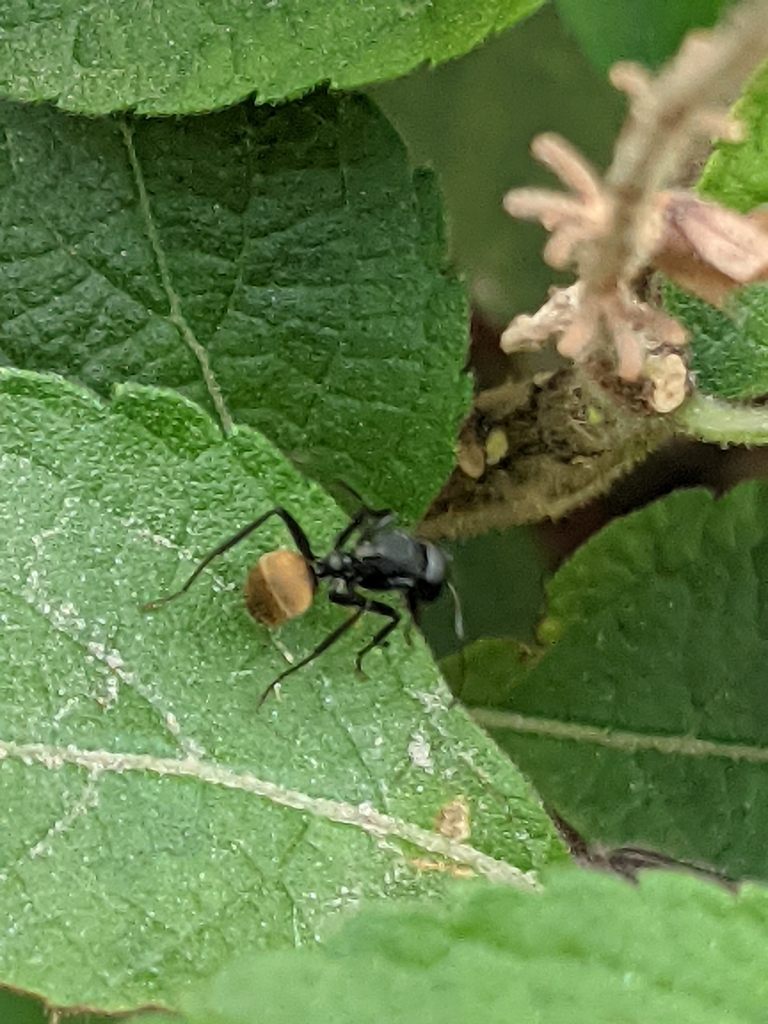

Photo: kumarkv, via iNaturalist, licensed under CC BY 4.0.
🐜 At a glance
Origin: Africa, Arabia, tropical Asia; savannah, dry woodland, orchards and gardens; nests in soil, often under stones
Nest temperature: 24–30°C all year; advanced Heating System Small at about 26°C, under a quarter of the nest
Outworld temperature: 21°C night, up to 28°C day; by day like the nest or a degree or two cooler
Humidity: Nest 60–80%; outworld about 50%, never watered
Winter: No hibernation; tropical: keep warm all year, growth still slows a little
Move to a nest: 3+ workers; 5+ is better
Size: Queen 11–13 mm; workers 7–11 mm, black with golden hairs, broad-headed majors
Colony: One queen; usually a few hundred workers, up to a few thousand
📖 About this species
A black carpenter ant with shining golden hairs that forages by day and leads nestmates to food in tandem runs. An African and Asian ant, not sold by Best Ants UK and possibly illegal or impossible to import to the UK.
🍯 Feeding
Proteins: Cricket Mash (the more efficient protein for carpenter ants) or Protein Jelly (keep it in the fridge)
Carbohydrates: organic Ant Honey or Ant Nectar, far better than sugar water or home-made mixes
Twice a week, small amounts, outworld only, on tin foil or a feeding dish; leftovers out after 2 days. Founding queen: a tiny drop of protein jelly on tin foil once a week. Small colonies don't need live insects
Buy food only from established ant-keeping suppliers: bird seed, dried mealworms and pet-shop live food often carry blood-sucking mites
💧 Watering the nest
Distilled or purified water only, never tap, rain or mineral water, even boiled
Pipette a few drops at a time through the watering hole and stop when 1 or 2 drops appear inside; water when the meter drops below 60%
Never open water: a watering test tube in the outworld, never a water dispenser; never water the outworld
🏠 Setting up the ant farm
Carpenter Ant Farm Starter Kit (nest with humidity and temperature meter) or A7 Plus with its pre-installed digital meter
Daylight, never direct sunlight; away from windows, radiators, vibration, speakers and kitchens. Test tube warmth: a heating cable at the cotton stopper end only, never a heat mat
Escape risk: fast runners and climbers. PTFE Fluon band around the top inner edge of the outworld lid, reapplied about every 4 weeks (every 2 weeks for 300+ ants)
💡 Good to know
Most carpenter queens eat their eggs in transit: normal for Camponotus, she lays again within 2–3 months
Day-active and warmth-loving: a worker leads a nestmate to food in a tandem run
On arrival: parcel unopened for 5 hours, then 4–5 days of complete rest. Never handle them, never a fridge, shed or garage
⭐ Golden rules | Never break these
🚫 Never put ants in a fridge, shed or garage, and never expose them to abrupt temperature changes.
🚫 Never use gel ant farms, Ytong or concrete nests, or DIY nests.
🚫 Never use tap, rain or mineral water, even boiled.
🚫 Never move a colony into a nest too early, and never tip or shake ants out of their tube.
🚫 Never release ants into the wild. If you can no longer keep a colony, visit our ants adoption page and ask us whether we can adopt it.
🛒 Recommended for this species
📚 These care notes cover the essentials only. Please read the full ant farm setup guide and our Camponotus sericeus care guide from A to Z. Questions? Message us through our contact form and we will be happy to help. 💚
Written and reviewed by the Best Ants UK team, keeping ants since 1997.