
Tetramorium semilaeve
Mediterranean Pavement Ant
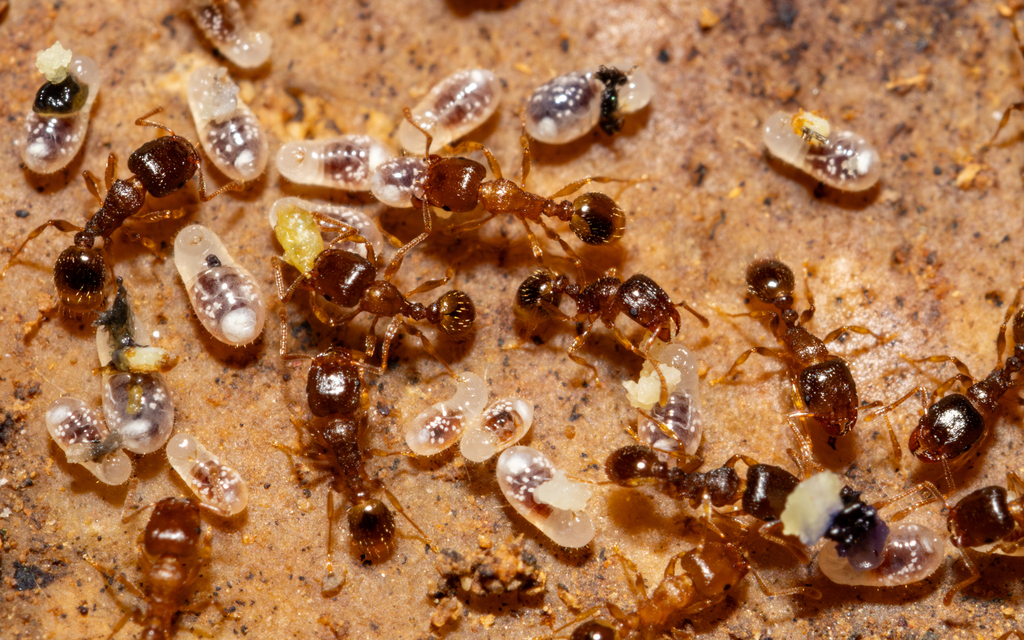

Photo: Diego González Dopico, via iNaturalist, licensed under CC BY 4.0.
🐜 At a glance
Origin: 🌍 Southern Europe, North Africa and the Mediterranean parts of Asia
Keeping level: Beginner, with good escape prevention. Tiny sting, far too small to bother people
Queen: 6–8mm, reddish brown
Workers: 2–4mm, reddish brown, all one kind (no soldiers)
Colony form: One queen (monogyne), up to about 10,000 workers
Nest temperature: 21–24°C (outworld about 18°C overnight, up to 28°C by day)
Nest humidity: 50–60%; outworld about 50%, never watered
Workers before moving into a nest: 50+ (tiny workers)
Winter: Natural rest from the end of October to the end of March — see below
📖 About this species
A tiny, busy Mediterranean ant that collects seeds as well as hunting. It loves warm, dry, sunny ground and even turns up on paved ground in towns. Easy to keep, but the workers are so small that the colony must grow big in its test tube first, and escape prevention must be perfect.
📦 When your ants arrive
⚠️ MOST IMPORTANT: leave the parcel completely unopened, exactly as it arrived, at room temperature for 5 hours. The ants must adjust to your home’s temperature gradually — abrupt temperature changes make ants seriously unwell.
After the 5 hours, check the queen is safe and sound, then leave the colony in its original packaging (test tube still in its tin foil and wrapping) in a quiet spot — in daylight, never direct sunlight — away from vibration and daily household activity.
😴 Give the colony 4 to 5 days of complete rest. The ants were fed before dispatch and need nothing from you during this time. Assemble and water the nest while you wait.
Still workers or a motionless queen after delivery are almost always delivery stress. Check the antennae: moving antennae means she is fine. Almost all recover within 4 to 5 days.
👑 A queen on her own: keep her test tube wrapped in its tin foil, undisturbed, and feed her once a week — a tiny drop of protein jelly, about half a grain of rice, on a small flat piece of tin foil placed inside the tube next to the dry cotton stopper. In our experience a fed queen raises her first workers faster.
🏠 Moving into the ant farm
Keep the colony in its test tube until it has at least 50 workers. The workers are only 2–4mm long, so a smaller colony is lost in an ant farm and the workers can abandon the queen. The same 50+ rule applies to a queen bought on her own.
Connect the test tube to the nest with the delivery tin foil still on and leave it for 14 days. Then slide the foil back about 1mm every day until the tube is fully exposed to daylight.
If the ants have not moved in 2 days after the tube is fully exposed, wrap the foil back on, wait another fortnight and repeat the whole process. Moving in happens on the ants’ own time: anywhere from a couple of days to 6 months.
The red filter and black cover stay on the nest at all times — it is pitch dark inside. The black cover can come off once a day for 2 to 3 minutes (ideally at night); the red filter once a week for 2 to 3 minutes.
☀️ Use a small A7-size ant farm: tiny ants feel lost in a big nest. Place it in normal daylight, never direct sunlight. Avoid windows, radiators and heaters, vibrating surfaces, speakers and TVs, and strong smells such as the kitchen.
🍯 Feeding
🍯 Sugars for worker energy: our organic ant honey or Best Ants UK Ant Nectar (an even richer energy source) — never sugar water or home-made mixes.
🥩 Protein for the queen and brood: Best Ants UK Protein Jelly, or Cricket Mash once the colony is larger. Keep protein jelly in the fridge at all times.
🌾 Seeds are part of their natural diet: a small pinch of our harvester seed mix on tin foil or a feeding dish. Never put seeds straight on the substrate, where they sprout — sprouted seeds are harmful to ants.
Feed twice a week, tiny amounts, in the outworld only. Remove leftovers after 2 days to prevent mould. Small colonies never need live insects.
🦗 Live food is only for big, established colonies. Always scald it first: wearing gloves, hold it with tweezers in just-boiled water (above 90°C, no longer bubbling) for 10 to 15 seconds, then cut it in half. Buy ant food only from established ant-keeping suppliers: bird seed, dried mealworms and pet-shop live food often carry blood-sucking mites.
💧 Watering the nest
💧 Use distilled or purified water only — never tap, rainwater or bottled mineral water, even boiled. They turn a nest green with mould.
Water the nest with the pipette provided: pour slowly, a few drops at a time, through the watering hole, and stop as soon as 1 or 2 drops appear inside the nest — that is how you know it is done correctly.
Once a week is usually right — slightly more in summer, less in winter. With a meter, water when the humidity drops below 50%. Never water the outworld.
🌡️ Temperature and winter
Keep the nest at 21–24°C. In a cool home (around 20°C or below), use the Advanced Heating System Small 4W set to 24°C, under no more than a quarter of the nest, on the side opposite the watering area.
Natural winter rest from the end of October to the end of March. A full hibernation (5–8°C) is only safe in a specialised hibernation unit with precise control; otherwise keep the colony at room temperature, where it simply slows down. We never hibernate queens in their first year.
Feed less in winter: at 17–22°C about a third of the summer amount, at 22–26°C about half. In full hibernation, fresh water only.
🤩 Did you know?
Some rare slave-maker ants, called Strongylognathus, raid Tetramorium semilaeve nests and use the workers to run their own colony.
The workers are bold with other ants and will take on intruders much bigger than themselves.
⭐ Golden rules | Never break these
🚫 Never put ants in a fridge, shed or garage, and never expose them to abrupt temperature changes.
🚫 Never use gel ant farms, Ytong or concrete nests, or DIY nests.
🚫 Never use tap, rain or mineral water, even boiled.
🚫 Never move a colony into a nest too early, and never tip or shake ants out of their tube.
🛡️ PTFE Fluon on the outworld is a must with workers this small: reapply about every 4 weeks for up to 100 ants, every 2 weeks for 300 or more.
🚫 Never release this species into the wild — a colony raised in an ant farm would not survive. If you can no longer keep it, visit our ants adoption page and ask us whether we can adopt it.
🛒 Recommended for this species
📚 These care notes cover the essentials only. Please read the full ant farm setup guide and our Tetramorium semilaeve care guide from A to Z. Questions? Message us through our contact form and we will be happy to help. 💚
Written and reviewed by the Best Ants UK team, keeping ants since 1997.