
Odontomachus infandus
Philippine Trap-Jaw Ant
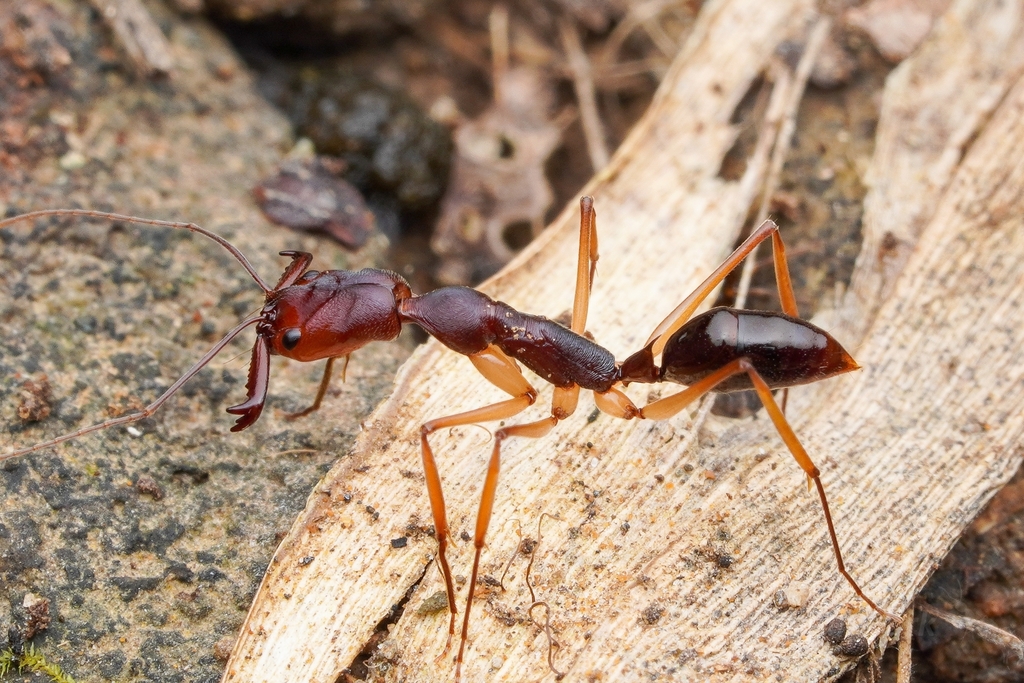

Photo: Jonghyun Park, via iNaturalist, licensed under CC BY 4.0.
🐜 At a glance
Origin: The Philippines; luzon and Mindoro; leaf litter of shady, humid forest, lowland to mountains
Nest temperature: 24–28°C all year; advanced Heating System Small at about 26°C, under a quarter of the nest
Outworld temperature: 21°C night, up to 28°C day; by day like the nest or a degree or two cooler
Humidity: Nest 60–80%; outworld about 50%, never watered
Winter: No hibernation; tropical: keep warm all year and keep feeding
Move to a nest: 10+ workers; start with a colony, never a lone queen
Size: Queen 15–16 mm; workers 12–16 mm, blackish brown, lighter brown head, long jaws
Colony: Usually one queen; A few hundred workers; semi-claustral founding
📖 About this species
A big trap-jaw ant from the shady, humid forests of the Philippines that snaps its jaws shut to catch prey and has a painful sting. Not sold by Best Ants UK and possibly illegal or impossible to import to the UK.
🍯 Feeding
Proteins: Protein Jelly for young colonies (keep it in the fridge). Established colonies only: small crickets or cockroach nymphs, scalded first, cut in half, given with long tweezers
Carbohydrates: a tiny drop of organic Ant Honey or Ant Nectar as an extra, once or twice a week
Twice a week, small amounts, outworld only, on tin foil or a feeding dish; leftovers out after 2 days. Founding queen: a tiny drop of protein jelly on tin foil once a week
Buy food only from established ant-keeping suppliers: about half of pet-shop live food carries blood-sucking mites
💧 Watering the nest
Distilled or purified water only, never tap, rain or mineral water, even boiled
Pipette a few drops at a time through the watering hole and stop when 1 or 2 drops appear inside; water when the meter drops below 60%
A watering test tube in the outworld for drinking; never water the outworld
🏠 Setting up the ant farm
A7 Plus with its pre-installed digital meter; the A6 with Meter as the colony grows into the hundreds
Daylight, never direct sunlight; away from windows, radiators, vibration, speakers and kitchens. Test tube warmth: a heating cable at the cotton stopper end only, never a heat mat
Escape risk: fast and can jump. PTFE Fluon band around the top inner edge of the outworld lid, reapplied about every 4 weeks (every 2 weeks for 300+ ants); lid closed
💡 Good to know
Strong, painful sting: never handle them, adults only, always long tweezers
The jaws snap shut in a fraction of a millisecond, and a frightened worker can flip itself into the air
On arrival: parcel unopened for 5 hours, then 4–5 days of complete rest. Never a fridge, shed or garage
⭐ Golden rules | Never break these
🚫 Never put ants in a fridge, shed or garage, and never expose them to abrupt temperature changes.
🚫 Never use gel ant farms, Ytong or concrete nests, or DIY nests.
🚫 Never use tap, rain or mineral water, even boiled.
🚫 Never move a colony into a nest too early, and never tip or shake ants out of their tube.
🚫 Never release ants into the wild. If you can no longer keep a colony, visit our ants adoption page and ask us whether we can adopt it.
🛒 Recommended for this species
📚 These care notes cover the essentials only. Please read the full ant farm setup guide and our Odontomachus infandus care guide from A to Z. Questions? Message us through our contact form and we will be happy to help. 💚
Written and reviewed by the Best Ants UK team, keeping ants since 1997.