Free UK Delivery on orders over £99

Pogonomyrmex badius
Florida Harvester Ant

🐜 At a glance
Origin: 🌎 South-eastern United States
Keeping level: Advanced — a species for careful adult keepers. It has a painful sting
Queen: About 11–14mm, larger and more robust than the workers
Workers: 4–8mm, majors 5–11mm; dark rust red to copper-brown
Founding: Fully claustral — the queen lives on her stored reserves while founding
Colony form: Single queen (monogyne); colonies can grow beyond 5,000 workers and live at least 19 years
Nest temperature: 29–32°C in one warm zone, with a cooler retreat (founding tube around 29–31°C)
Nest humidity: Brood areas moist but never flooded, with a dry area for seed storage
Workers before moving into a nest: Once workers forage reliably and the tube collects waste
Winter: A gradual winter rest — see below
📖 About this species
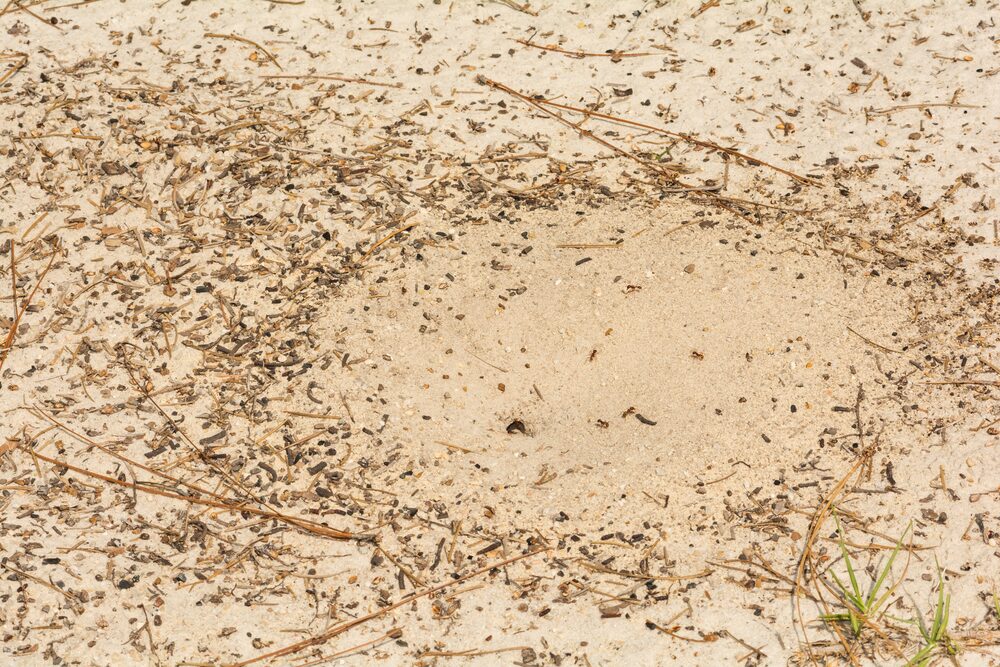
The Florida harvester ant of the south-eastern United States: a seed-collecting species with workers of several sizes, from 4mm minors to 11mm majors. A large colony can dig out 5 to 6 litres of sand weighing as much as 20kg. It is generally not legal or available in the UK or Europe — our Messor barbarus is a non-stinging harvester alternative.
⚠️ This species stings. Keep it away from children and handle the setup with care.
🇺🇸 Not sold by Best Ants UK. US keepers can buy from Stateside Ants, which holds a USDA permit.
📦 When your ants arrive
⚠️ MOST IMPORTANT: leave the parcel completely unopened, exactly as it arrived, at room temperature for 5 hours. The ants must adjust to your home’s temperature gradually — abrupt temperature changes make ants seriously unwell.
After the 5 hours, check the queen is safe and sound, then leave the colony in its original packaging (test tube still in its tin foil and wrapping) in a quiet spot — in daylight, never direct sunlight — away from vibration and daily household activity.
😴 Give the colony 4 to 5 days of complete rest. The ants were fed before dispatch and need nothing from you during this time. Assemble and water the nest while you wait.
Still workers or a motionless queen after delivery are almost always delivery stress. Check the antennae: moving antennae means she is fine. Almost all recover within 4 to 5 days (a little longer for bigger queens).
Do not remove the black divider inside the test tube (between the two cotton stoppers) — it keeps the ants safe in transit. It has a hole, and the queen and all workers pass through it without any issue.
👑 A queen on her own: keep her test tube wrapped in its tin foil and undisturbed. She is fully claustral, so she needs no food until her first workers arrive.
🏠 Moving into the ant farm
Keep the colony in its test tube until the workers forage reliably and the tube is collecting waste. Add more space only when the workers fill about a third to a half of what they already have.
Connect the test tube to the nest with the delivery tin foil still on and leave it for 14 days. Then slide the foil back about 1mm every day until the tube is fully exposed to daylight.
If the ants have not moved in 2 days after the tube is fully exposed, wrap the foil back on, wait another fortnight and repeat the whole process — patience is the key. Moving in happens on the ants’ own time: anywhere from a couple of days to 6 months.
The red filter and black cover stay on the nest at all times — it is pitch dark inside. The black cover can come off once a day for 2 to 3 minutes (ideally at night); the red filter once a week for 2 to 3 minutes.
☀️ Place the ant farm in normal daylight, never direct sunlight (the sun can overheat a nest within minutes). Avoid windows, radiators and heaters, vibrating surfaces, speakers and TVs, strong smells such as the kitchen, and busy walkways. Keep a steady room temperature.
🍯 Feeding
🌾 Seeds are the main diet: small, untreated seeds such as dandelion and fine grass seed — workers mainly open seeds of about 1mm or smaller. Serve them dry on a tin foil tray, never on damp substrate, because sprouted seeds are harmful.
🥩 Protein: Best Ants UK Protein Jelly, or small pre-killed (frozen, then thawed) fruit flies, pieces of cricket or mealworm, or roach nymphs. Remove uneaten protein within 24 to 48 hours.
Start with tiny portions and increase as the workers and brood grow. Feed in the outworld only.
💧 Harvester ants must never have open water — they can drown in it. Use a watering test tube or moist cotton in a small cap.
🦗 Never feed live insects to a small colony. Use pre-killed prey only: freeze it, thaw it, then serve it in the outworld on a small tin foil tray.
💧 Watering the nest
💧 Use distilled or purified water only — never tap, rainwater or bottled mineral water, even boiled. They carry minerals and microbes that turn a nest green with mould. A litre of distilled water costs a few pounds and lasts over a year.
Water the nest with the pipette provided: pour slowly, a few drops at a time, through the watering hole, and stop as soon as 1 or 2 drops appear inside the nest — that is how you know it is done correctly. More than that is too much.
Once a week is usually right — slightly more in summer, less in winter. Never water the outworld.
🌡️ Temperature, heating and winter
Keep one warm zone at 29–32°C with the Advanced Heating System Small 4W, warming no more than a quarter of the nest on the side opposite the water inlet, so the ants can choose their temperature.
For the winter rest, reduce food to what the colony collects, keep water topped up, and lower the temperature gradually over 2 to 4 weeks in a cool, stable, unheated room. Raise it gradually again in spring.
Never use a fridge, and never make abrupt temperature changes. For absences of more than two weeks, ask someone to refill the water.
🤩 Did you know?
Colonies move house anywhere from once every two years to four times a year — about once a year on average.
The sting pain often peaks within 20 to 30 minutes and can last more than eight hours.
⭐ Golden rules | Never break these
🚫 Never put ants in a fridge, and never expose them to abrupt temperature changes. Cold does not kill a colony instantly — the ants get sick and die over the following days — and prolonged cold near freezing damages the sperm a queen stores from her nuptial flight, so she may never lay fertile eggs again.
🚫 Never use gel ant farms, Ytong or concrete nests, or DIY nests.
🚫 Never use tap, rain or mineral water, even boiled.
🚫 Never move a colony into a nest too early, and never tip or shake ants out of their tube.
🚫 Never disturb the colony with tapping or handling — vibration stresses the queen and she can stop laying or eat her eggs.
☀️ Never keep the farm in the dark: ants need daylight for their circadian rhythm. Daylight yes — direct sunlight never.
🚫 Never release this species into the wild. If you can no longer keep it, visit our ants adoption page and ask us whether we can adopt it.
🛒 Recommended for this species
📚 These care notes cover the essentials only. Please read the full ant farm setup guide and our Florida harvester ant care guide from A to Z. Questions? Message us through our contact form and we will be happy to help. 💚
Written and reviewed by the Best Ants UK team, keeping ants since 1997.