
How to Care for Tapinoma melanocephalum | The Ghost Ant Guide
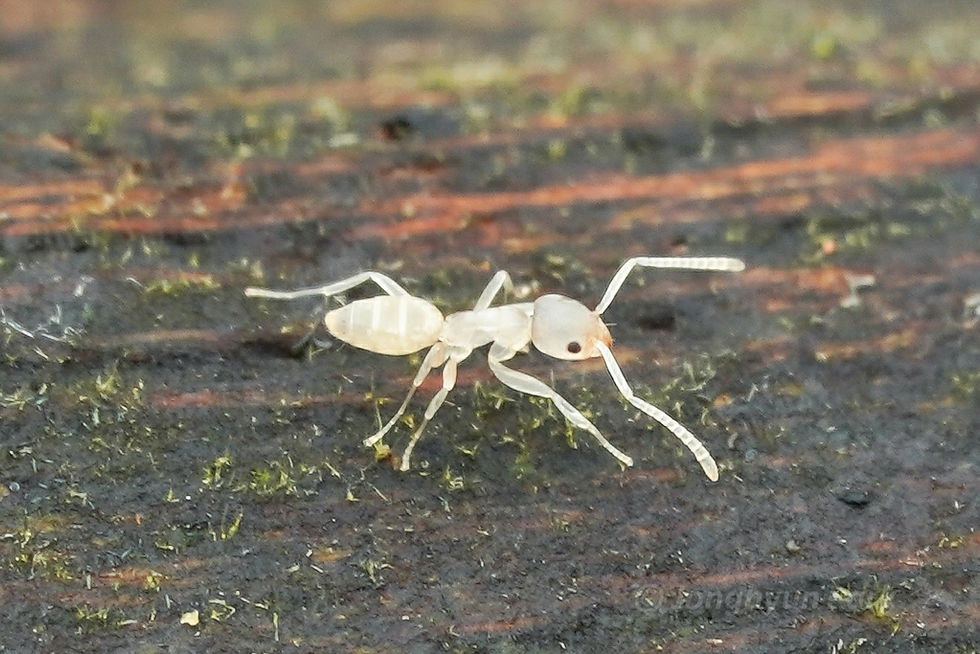
Photo: Jonghyun Park, via iNaturalist, licensed under CC BY 4.0.
Tapinoma melanocephalum is the ghost ant: one of the smallest ants kept, with a dark head and a pale, almost see-through body. On a white surface it seems to disappear, which is how it got its name.
It is quick, busy and fascinating to watch, but it is also a well-known household pest in warm countries. This guide explains Tapinoma melanocephalum care honestly and step by step, including how to keep every worker safely inside.
Tapinoma melanocephalum is a tropical tramp ant, and Best Ants UK does not sell it. It may be illegal or impossible to import into the UK, and we never encourage importing ants. This guide is for experienced keepers, and for anyone curious about this tiny ant.
We have kept ants since 1997, and these are the care rules we use for our own colonies every day.
👉 In a hurry? Download our free Tapinoma melanocephalum care sheet (PDF), open the Tapinoma melanocephalum care sheet page or explore all our free ant care sheets.
Tapinoma melanocephalum at a Glance
Also known as: the ghost ant, black-headed ant or tramp ant
Origin: uncertain, probably tropical Africa or Asia; now found in warm places worldwide
Sold by Best Ants UK: no, it is a tropical tramp ant and a known pest
Keeping level: Advanced (escape risk and pest status)
Queen: about 2.5mm, the biggest ant in the colony
Workers: about 1.3 to 2mm, all one size, dark head and thorax, pale milky legs and gaster
Colony: many queens, spread over several linked nests; up to a few thousand workers
Nest temperature: 24 to 28°C all year, best at around 26°C
Nest humidity: 50 to 70%
Workers before moving into a nest: 50+
Winter: no hibernation, keep warm all year
Escape risk: extremely high, so a fresh PTFE barrier and a tight lid are a must
A Pest Ant: Please Read This First
In warm countries the ghost ant is one of the most common ants inside homes. In cool countries it can only live indoors, in heated buildings and greenhouses. In Britain, ghost ant infestations have been found in blocks of flats, and some have survived repeated treatments.
A colony has many queens and splits easily: a queen and a few workers can walk off and start a new nest. So a small escape can turn into an infestation in your home, and even your neighbours' homes.
So be honest with yourself before keeping this species. You need a well-sealed ant farm, a fresh PTFE barrier, a lid that is always closed and the time to check everything every week. If that sounds like too much, choose a UK native instead.
Meet the Ghost Ant
Outdoors, in the tropics, ghost ants nest in small, damp hiding places: in dead grass tufts, hollow plant stems, under bark, in plant pots and under objects on the ground. Indoors they move into wall cavities, cupboards, gaps behind skirting boards and potted plants.
The workers run fast and in sudden zigzags, and they form busy trails to food. They love sweet things, tend honeydew-making insects such as aphids, and collect small dead and live insects for protein. A crushed worker gives off a smell rather like rotten coconut.
There are no big mating flights. A colony is spread over several small nests, each with its own queens, and workers travel between them along scent trails. New nests start by budding, when queens walk away with a group of workers and brood.
When Your Ants Arrive
The most important step: leave the parcel completely unopened, exactly as it arrived, at room temperature for 5 hours. The ants must adjust to your home's temperature slowly, because abrupt temperature changes make ants seriously unwell.
After the 5 hours, check the queens are safe and sound. Then leave the colony in its original packaging, with the test tube still in its tin foil and wrapping.
Put it somewhere quiet and still, away from daily household activity. Normal daylight is fine, but never direct sunlight.
Give the colony 4 to 5 days of complete rest, with no food. A good supplier feeds the ants before dispatch. Use this time to set up and water the nest. 👉 Our step-by-step ant farm setup guide shows you exactly how.
Still workers or a motionless queen after delivery are almost always delivery stress. Look at the antennae: moving antennae mean the ants are fine. Almost all recover within 4 to 5 days.
Life in the Test Tube
Ghost ant workers are tiny, so the colony must grow big in its test tube first. Keep it there until it has at least 50 workers. Moved earlier, the workers scatter in the bigger space and the colony can fail. The same rule applies to a queen on her own.
Colonies usually start as a small group of queens with workers, not a lone queen. If you ever have a queen on her own, give her a tiny drop of protein jelly once a week, about half a grain of rice, on a small flat piece of tin foil inside the tube, next to the dry cotton stopper.
In our experience a fed queen raises her first workers faster, and the colony does far better afterwards. Keep the tube wrapped in its foil and disturb it as little as possible.
Kept warm and well fed, ghost ants grow fast, and with several queens laying, a small group can reach hundreds of workers surprisingly quickly.
Moving Into the Ant Farm
When the colony is ready, connect the test tube to the nest with the delivery tin foil still on. Leave it like that for 14 days.
Then slide the foil back about 1mm every day until the tube is fully exposed to daylight. If the ants haven't moved 2 days later, wrap the foil back on, wait another fortnight and repeat. Moving in can take from a couple of days to 6 months.
Once the colony has moved, leave the old test tube connected for at least another 14 days, as ants sometimes leave brood behind.
The red filter and black cover stay on the nest all the time. You can lift the black cover once a day for 2 to 3 minutes, ideally at night, and take the red filter off once a week for 2 to 3 minutes. Take colony photos once a month at most.
The Best Ant Farm for Ghost Ants
Ghost ant workers are among the smallest ants kept, and they fit through gaps you can hardly see. Their home must be well made and escape-proof, with tight-fitting connections. A young colony also feels safest in a small nest it can fill.
For tiny species we recommend the A7 Plus ant farm kit only (you will find the link at the end of this guide). Its small nest suits tiny workers, and its pre-installed digital meter shows nest temperature and humidity at a glance.
Place the ant farm in normal daylight, never direct sunlight. Avoid windows, radiators and heaters, vibrating surfaces, speakers and TVs, and above all the kitchen: strong smells upset the ants, and escaped ghost ants head straight for sweet food.
Temperature and Heating
This is a tropical ant, and it needs steady warmth. Keep the nest at 24 to 28°C all year. The brood develops best at around 26°C, and in a cool nest the colony barely grows.
Most UK homes are cooler than that for much of the year. 👉 The Advanced Heating System Small 4W holds a steady warm spot with its digital thermostat. Set it to 26°C.
The heat mat goes under one quarter of the nest only, on the side opposite the watering area, so the ants can choose their spot. Never heat the whole nest.
Warm the outworld too, because a big gap between nest and outworld confuses the ants. Aim for at least 20°C overnight, up to 28°C by day, ideally matching the nest or a degree or two cooler.
Water and Humidity
Keep the nest humidity at 50 to 70%. Use distilled or purified water only. Never use tap water, rainwater or bottled mineral water, even boiled: they cause mould and fungus, which is deadly for ants.
Water the nest with the pipette provided. Pour slowly, a few drops at a time, through the watering hole. Stop as soon as 1 or 2 drops appear inside the nest. That is how you know it is done correctly.
Water about once a week. A heated nest dries out faster, so check the meter often and water as soon as the nest humidity drops below 50%.
Never water the outworld. Keep it dry, at about 50% humidity, like an average UK home. A watering test tube in the outworld gives the workers a safe drink.
Feeding Your Ghost Ants
Ghost ants have a real sweet tooth, but the queens and brood need protein too. Feed twice a week, in small amounts, in the outworld only. Remove leftovers after 2 days to stop mould.
🍯 For energy, give our 👉 organic ant honey or 👉 Ant Nectar, which has even more carbohydrates than honey. Both are far better than sugar water or home-made mixes. Offer tiny drops, as such small workers easily get stuck in a big one.
🥩 For the queens and brood, give 👉 Protein Jelly or 👉 Cricket Mash. Keep protein jelly in the fridge at all times.
Serve food on a small piece of tin foil or in a 👉 small feeding dish, so leftovers are easy to lift out.
Live food, such as crickets or locusts, is only for big, established colonies, never small ones. Always scald it first: wearing gloves, hold it with tweezers in just-boiled water (above 90°C, no longer bubbling) for 10 to 15 seconds.
Then cut it in half only, and serve it in the outworld.
Keep Mites Out of Your Colony
Blood-sucking mites are one of the biggest dangers for any ant colony, and they are not rare. They often arrive with bird seed from local shops and off-licences, dried mealworms (useless as ant food), and live food from pet shops or online, where about half carries mites.
Buy ant food only from established, reputable ant-keeping suppliers. At Best Ants UK we clean our foods before dispatch, check every colony twice a month, and check each colony again before it leaves us.
Now and then, look at your queens with a magnifying glass. Tiny white or reddish specks on their joints and legs, together with ants dying fast, are a warning sign of blood-sucking mites.
Stopping Escapes
With ghost ants, escape-proofing matters more than anything else. Paint a band of 👉 PTFE Fluon escape barrier around the top inner edge of the outworld lid. The ants slip off it and can't climb out.
PTFE wears off as the ants keep testing the same spots. For up to about 100 ants, reapply it roughly every 4 weeks. Once the colony reaches 300 to 500 ants or more, which happens quickly with this species, reapply it about every 2 weeks.
Never shake the bottle, because it foams. Roll it gently in your hands instead.
Keep the outworld lid closed at all times, and check every tube and connection each week. Pale workers under 2mm are very hard to spot, so look closely.
For extra safety, many keepers of tramp ants stand the whole ant farm inside a larger, smooth-sided plastic box with its own PTFE band. Any escapee is then caught before it reaches your home.
If ants ever do escape, never spray them. Sprays make ghost ants scatter and split into new nests. Professional pest controllers use slow-acting baits that the workers carry home.
Winter Care
Tapinoma melanocephalum is a tropical ant with no winter rest at all. Keep the nest at 24 to 28°C right through every UK winter, with the heating system running, and never let the colony get cold.
Never put ants in a fridge, shed or garage, and avoid any abrupt temperature change. The colony may slow down a little in winter anyway, because its biological clock can't be tricked.
If the ants eat less in winter, give a little less, but never guess. At 22 to 26°C, give about half the summer amount, still twice a week.
Can I Release My Ghost Ants?
Never. A tropical ant can't live outdoors here, but escaped ghost ants can settle inside heated buildings and become a pest. Never release them, and never let any escape.
If you ever can't keep your colony any more, 👉 visit our ant adoption page and let us know. We'll see whether we can take it in.
Frequently Asked Questions | FAQ
Is Tapinoma melanocephalum good for beginners?
No. Ghost ants are hardy, but the workers are under 2mm long, very fast and almost see-through, and escaped ants can become a pest in a home. They are for experienced keepers only. For a first colony, a UK native such as Lasius niger is far better.
Can I buy Tapinoma melanocephalum in the UK?
Best Ants UK does not sell Tapinoma melanocephalum. It is a tropical tramp ant and a known indoor pest, and it may be illegal or impossible to import into the UK. We never encourage importing ants.
Why is it called the ghost ant?
Its legs and gaster are pale, milky and almost see-through, while the head and thorax are dark. On a light surface the pale parts seem to vanish, so only a tiny dark dot appears to move.
How many workers before moving ghost ants into a nest?
At least 50 workers. The workers are only about 1.3 to 2mm long, so a smaller colony is lost in an ant farm. The same rule applies to a queen on her own.
What temperature do ghost ants need?
Keep the nest at 24 to 28°C all year. Most UK homes are cooler, so use an Advanced Heating System set to 26°C under one quarter of the nest. Never let the colony get cold.
Do ghost ants hibernate?
No. This tropical ant has no winter rest at all. Keep the heating on right through the winter and never put the ants in a fridge, shed or garage.
What if my ghost ants escape?
Never spray them. Sprays make ghost ants scatter and split into new nests. Professional pest controllers use slow-acting baits. Strong escape-proofing from day one is the best protection.
Ready to Keep Ants the Safe Way?
👉 Whatever species you keep, start with the A7 Plus ant farm kit. Its small nest suits tiny workers, its pre-installed digital meter shows temperature and humidity at a glance, and if you already have your ants, choose its Nest + Outworld option.


