
Iroko Wooden Ant Farm | The African Teak Ant Nest Built to Last
Some ant nests are printed, some are cast in plaster. This one started life as a tree in the tropical forests of West Africa. Our iroko wooden ant farm is a handmade hardwood ant nest, and it has spent years proving itself with real colonies.

It suits UK natives such as Myrmica rubra, harvester ants such as Messor barbarus, and carpenter and Asian species such as Camponotus nicobarensis. This is our last planned batch, and every nest is one of a kind.
👉 Ready to choose yours? See the iroko wooden ant nest.
What Comes With the Iroko Wooden Ant Farm
Every iroko nest comes with a built-in temperature and humidity meter fitted with a Duracell LR44 battery, a natural Greek sea sponge watering area with a tray underneath, a temperature probe port with its silicone plug, and two stoppers, one for chamber 1 and one for chamber 4.
You also get a red filter and a black cover, both in 3mm acrylic. The nest comes in two versions: the standard iroko nest, with or without our Advanced Heating System Small 4W, and the carpenter ant version, also with or without heating.
Want the full setup? Choose the nest on its own or as a complete set with a Small (98 x 78 x 98mm)

Medium (220 x 78 x 95mm)

or Large (240 x 200 x 95mm) Ant Arena outworld.

Every set comes with the outworld’s accessories, and because this is a premium setup, we add a Fluon PTFE escape barrier to all three for your peace of mind.
Size: 150 x 90 x 40mm, or 46mm high with the lids on. With both exits, the nest is 185mm long.
Connections: both exits are 12mm outside diameter. A queen’s test tube silicone connector is included: it joins a 16 or 17mm test tube to the nest, comes with two clips to secure it, and has a 10-year guarantee against ageing.
How to Set Up Your Iroko Wooden Ant Farm | Step-by-Step Video
Curious how to set up this wooden ant farm? Here is the complete assembly video, step by step: the PTFE escape barrier, the sand and plants in the outworld, the watering test tube, attaching the queen’s test tube, the tinfoil, watering the sponge, the heating system, and finally removing the empty test tube once your colony has moved in.
👉 Ready to build yours? See the Iroko Wooden Ant Farm Starter Kit.
Our Iroko Wooden Ant Farm Story | From One Customer’s Request to a Collector’s Piece
It began at the end of 2020, on a cold November day. A keeper in Qatar asked us for a nest made from hardwood. We gave him a few options, and he chose iroko.
There was no ready-made way to cut a nest like this, so Pat made a special stencil with five different patterns and shaped the wood by hand with a handheld router. Four nests came out of that first run.
We tested the nest for a month for leaks before it went to Qatar. Our customer moved in a Messor barbarus harvester colony, and it grew very quickly. Qatar is warm enough that he did not need heating.
Next came a second prototype, with a port on the side for the temperature probe of a heating system. From 2023, we tested it for about a year and a half, measuring humidity and temperature in three separate zones of the nest, and in March 2024 we began the documented colony trials. When the nest proved itself, we ordered top-grade, kiln-dried West African iroko and crafted just ten more wooden ant farms.
👉 Curious how it all started? Read the story of how we created the perfect ant farm.
Iroko | The Tree Behind Our Wooden Ant Farm
Iroko is the common name for two closely related West African trees, Milicia excelsa and Milicia regia, sold together in the timber trade simply as iroko. A tree can live for up to 500 years.
“African teak” is a trade name: iroko looks and performs a lot like teak, but the two trees are not related. Freshly cut, iroko is yellow, and left untreated, it slowly darkens to a rich copper brown.
The Yoruba people of West Africa believe the iroko holds a spirit. We cannot promise your ants will hear it, but we like to think they are living in a very special home.
Why We Chose Iroko for a Wooden Ant Farm
An ant nest lives with moisture every single day. Most woods slowly soften, swell or rot in those conditions. Iroko heartwood is naturally very durable and resists rot, and once dry it hardly moves, so the chambers keep their shape.
We did not start with iroko. Our first wooden ant farms, back in 2011, were made from pine. Watered pine went mouldy in our tests, and mould is deadly to ants.
Pine might seem to suit carpenter ants, which like low humidity, but there is a catch. Keep a pine nest dry, or leave it to dry out for a month or two between colonies, and it cracks within 45 to 60 days. It happened every time. Add a little moisture instead, and the first piece of fresh wood the ants carry in grows mould the very next day.
We tried oak and maple next, and both had the same issues. Only teak and iroko passed our tests.
The downside is that iroko is very hard to work with. Set the router speed 500 RPM too low and the router cutter breaks; 500 RPM too high and the cutter overheats, the wood starts to burn, and that quite expensive cutter goes straight in the bin. Every chamber is cut, cleaned and sanded by hand.
Wooden Ant Farm Durability Tests

Before we offered the iroko wooden ant farm to anyone, we left our nests for a couple of years to see how the wood copes in different conditions.
One nest spent more than a year outdoors, in rain and sun, and it is still in perfect condition: no cracks, no damage of any kind, no colour change and no mould. Leftover nests from our first trials were frozen and thawed, again and again, over a couple of months, and every one came through in the same perfect condition.
Where the Iroko for Our Wooden Ant Farm Comes From
Our iroko is top-grade West African hardwood (FAS grade, kiln-dried) from Timbersource UK, an FSC and PEFC certified UK timber merchant in Somerset (FSC INT-COC-002136, PEFC CATG-PEFC-COC-050). It is not Nigerian iroko, which is known for lower-quality timber because of the soil conditions there and root rot.
The Wooden Ant Farm Finish
All cutting and sanding happens in our workshop. Every nest is then cleaned and sealed with our own blend of oils and varnish, developed for ants. We tried teak oil early on and dropped it: its strong smell sends ants running away from the nest.
Every colony in our trials moved in, settled and grew in nests with this finish.
Inside the Wooden Ant Farm | Four Chambers, Each With a Job
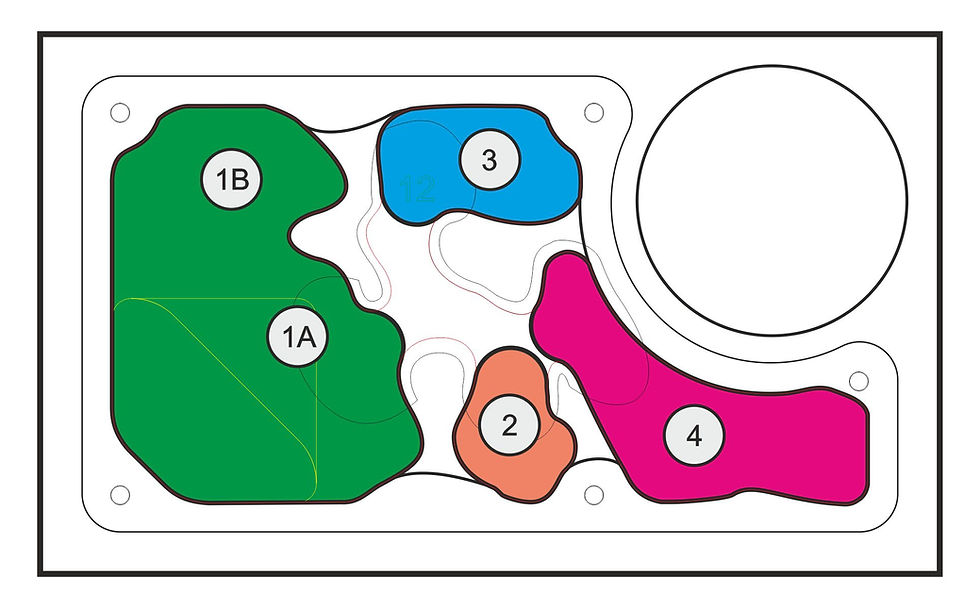
Ants move their eggs, larvae and pupae around the nest, always looking for the right mix of moisture, warmth and fresh air. Chamber 1 has two sections, 1A and 1B, so there are five labels for four chambers. Here is how the five colonies in our trials used them.
Chamber 1A | The main chamber. The big chamber right next to the humidity area. This is the most humid part of the nest and the heart of the colony.
Chamber 1B | The queen’s corner. Top left, a little drier, with temperatures that suit the queen. This is where the queens settled.
Chamber 2 | The pupae room. The lower chamber is cooler and drier. When the brood reached the pupa stage, the workers carried it down here.
Chamber 3 | The brood nursery. Top right, right next to the meter. It has more airflow and a little less moisture, and the colonies raised their brood here.
Chamber 4 | Three jobs in one. Once the queen’s test tube comes out, what you put in its place decides what the far-right chamber does.
Cotton plug: food store. Air passes through the cotton, flows across the nest’s chambers, then through the silicone connection kit, and out through the outworld opening in the lid. The chamber stays dry, which makes it a food store for seeds and other food.
Plastic stopper: more humid. The stopper keeps the moisture in. This is our recommended option for humidity-loving species such as UK native ants.
Water tube: most humid. Fit a watering test tube, such as a 16 x 100mm test tube, and the chamber becomes an extra drinking point with much higher humidity. This is the best option for Asian species, which love high humidity.
Watering Your Wooden Ant Farm | The Hidden Humidity Tray
Water the nest through the yellow sponge with distilled or purified water only. Add it a few drops at a time with a pipette until one or two drops appear inside the nest area, then stop.
The sponge is a natural Greek sea sponge. Sea sponges are known to produce natural antimicrobial compounds, and with distilled water, none of our iroko nests has ever gone mouldy.
Underneath sits a plastic tray that holds the water and keeps the humidity steady. It is both the humidity reserve for the whole nest and a drinking source for the ants, and UK native species, which like it more humid, make good use of it.

Heating a Wooden Ant Farm | A Port for the Temperature Probe
Every iroko nest has a small port on the right side, just under the meter. It takes the external temperature probe of our Advanced Heating System Small 4W, so the thermostat can read the temperature inside the nest and switch the heating mat on and off. A silicone plug seals the port around the probe, or on its own when no probe is fitted.

Because the probe sits right by the meter, inside the nest, the thermostat reading is very accurate.
The whole nest can be heated. Plaster, acrylic and 3D-printed nests should only be heated on a quarter of their area, on the side opposite the water. A wooden ant farm made from iroko is different. As natural wood, it warms up slowly, just like soil in nature, and then holds a very stable, accurate temperature for a long time, so you can heat the entire nest.
Very rarely, if the temperature is set very high, a little condensation can appear. If that happens and your species needs high temperatures, such as exotic ants, heat just half of the nest opposite the humidity area.

The Meter | One Small Battery
The built-in meter runs on a single LR44 button battery. We only fit Duracell, which lasts between 18 and 24 months. The cooler you keep the nest, the shorter the battery life.
The meter is held in place with a little PVA glue at the corners. Lift it up, change the battery, add a dab of fresh PVA glue to the corners and put it back. No PVA glue to hand? Blu Tack or white tack will seal it for the time being. A stainless steel mesh separates the meter opening from the chambers, so no ants can escape while the meter is out.
The meters on our first production nests, dated 20 April 2024, are still working perfectly today.
Red Filter and Black Cover | Included
The 3mm red acrylic filter cuts the light inside the nest by 70%, so you can watch your colony while it stays in dim light. Add the 3mm black acrylic cover on top and the inside goes completely dark, just like a nest underground.
Both acrylic covers come with a 10-year guarantee. You will find the full details on the iroko nest product page.

Reuse | One Wooden Ant Farm, Many Colonies
Thanks to our special blend of oils, the iroko itself does not absorb anything from the ants. The lining is different: both the substrate and the sawdust linings need 14 days in fresh air for the old pheromones to fade.
That means a nest that housed a healthy colony can be reused after a 14-day rest, even for a different species. No washing or watering is needed.
Undo the couple of screws and take off the lid. Remove any dead ants and debris, then leave the nest open outdoors in a sheltered spot, out of direct sun and rain, for 14 days so the old pheromones fade away. Put the lid back on, and it is ready for its next colony.
If the previous colony had mould or disease, contact us before reusing the nest.
Two Wooden Ant Farm Versions | Standard or Carpenter Ant
Inside the chambers, every iroko nest has a lining glued permanently in place. The lining is what makes the two versions different.
Standard iroko nest. A substrate lining, available with or without the heating system.
Carpenter ant iroko nest. A wood sawdust lining bonded with resin, closer to the timber carpenter ants nest in naturally. Most carpenter ants do best with warmth, so we recommend adding the heating system, but it is optional.
Tested by Our Own Colonies
We do not sell a wooden ant farm until ants have lived in it. The very first iroko nest raised a fast-growing Messor barbarus colony in Qatar from 2020, and our documented trials started in March 2024.
Myrmica rubra. Our Myrmica rubra colony moved in first. We documented this trial with readings across the chambers, and the colony settled in and thrived.
Camponotus nicobarensis. A Camponotus nicobarensis queen with about 11 workers moved in next. Six months later, the colony had grown to around 150 workers.
Messor barbarus. A Messor barbarus queen with about 20 workers moved into a second iroko nest the following week. With the bottom-left corner gently heated, the colony grew to around 300 workers in six months.
Lasius niger. A black garden ant colony grew from a queen with about 30 workers to around 300 in six months.

Which Ants Is the Iroko Wooden Ant Farm For?
Harvesters get their seed store, UK natives a more humid chamber 4, and Asian species their extra-humid nursery. As with any nest, small colonies must stay in their test tube first: at least 10 workers for UK natives and Messor barbarus, and at least 3 for Camponotus. Our guide on why small ant colonies must stay in a test tube explains why.
When your colony is ready, the included queen’s test tube silicone connector joins the queen’s test tube to the nest. Keeping harvesters? Stock up on organic harvester ant seeds to fill that seed store.
Get Your Iroko Wooden Ant Farm
This is the last batch of iroko wooden ant farms we have planned. Each one is handmade, one of a kind, and part of the Best Ants UK story, so whoever keeps ants in one owns a real collector’s piece.
👉 Or browse our full range of wooden ant farms and nests.
Iroko Wooden Ant Farm | Frequently Asked Questions
What is iroko wood, and why use it for a wooden ant farm?
Iroko is a West African hardwood from the Milicia excelsa and Milicia regia trees, and one of the best timbers for a wooden ant farm. It is sold under the trade name African teak, although it is not related to true teak. It is naturally very durable and resists rot.
How do I water the iroko wooden ant farm?
Through the yellow sponge, with distilled or purified water only. Add a few drops at a time with a pipette until one or two drops appear inside the nest, then stop.
Can I heat the iroko wooden ant farm?
Yes. Every iroko nest has a port under the meter for the temperature probe of our Advanced Heating System Small 4W. Unlike plaster, acrylic or 3D-printed nests, the whole iroko nest can be heated. Heating is optional for both the standard nest and the carpenter ant version.
What battery does the wooden ant farm meter use?
One LR44 button battery. We fit Duracell, which lasts 18 to 24 months, less if the nest is kept cool.


